

An official with the Chinese embassy in the U.S. confirms President Trump and Chinese President Xi...
U.S. & China Suspend Trade Tariffs on Some Ag Products
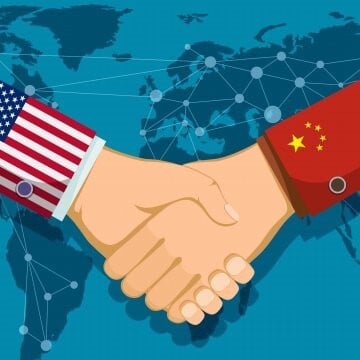
President Donald Trump and China's President Xi Jinping agreed to a two-month extension of their tariff truce and announced next steps for their Board of Trade at their recent summit in Washington, D.C.
After Trump and Xi met in Busan, South Korea, in October 2025, the U.S. and China agreed to pause their escalating tariff battle until November 10, 2026. They have now extended that truce through January 10, 2027, including a suspension of Section 301 shipping fees.
The U.S.-China Board of Trade was established after the two leaders met in Beijing this past May to manage bilateral trade across non-sensitive goods and promote trade reciprocity. Their recent meeting laid out the board's working procedures, including its mission, leaders and a meeting schedule.
The Board of Trade will be overseen by U.S. Trade Representative Jamieson Greer and Treasury Secretary Scott Bessent for the U.S. and by Vice Premier of the State Council He Lifeng for China.
The board's initial focus is a dialogue to consider lists of mutually agreed upon imported goods totaling roughly $30 billion on each side, with a view toward providing reduced tariff treatment to those goods in a reciprocal manner. The two sides further agreed to work expeditiously to identify certain goods for inclusion in the 30-for-30 framework, according to the White House.
Recommendations were made for a list of U.S. products for import into China and a list of Chinese products to be imported into the U.S. that are comparable in value and would see tariff reductions.
The U.S. exports identified for the 30-for-30 framework include agricultural goods, fish and seafood, logs and wood products, cosmetics and medical devices, while the U.S. imports include consumer products like small appliances, toys, holiday decorations and children's car seats, according to the Administration. The board's deputies may also propose additional products for potential inclusion on the list in the future.
"As a direct result of the strong relationship between President Trump and President Xi, the United States and China, under the auspices of the new Board of Trade, have recommended $30 billion of trade in non-sensitive goods on each side that could benefit from more favorable tariff treatment in the future," USTR Ambassador Greer said in a statement. "From agricultural products to medical devices, President Trump is unlocking improved market access for about 30 percent of U.S. exports to China, while benefiting consumers with imports from China of household goods, toys and other products that the United States generally does not import from other countries."
According to CoBank analysts, China will remove its 10% reciprocal tariff on U.S. agricultural products, including corn; wheat; sorghum; rice; barley; beef; chicken; dairy products, such as butter, cheese and cream; and many others - but not on soybeans.
The American Soybean Association, which, in the week leading up to the meeting, had asked the Trump Administration to push China to fulfill its soybean purchase commitments and remove trade barriers, said it is disappointed U.S. soybeans were not included among the agricultural products receiving tariff relief. "China's remaining 10% retaliatory duty limits access for private Chinese importers, meaning soybean trade will continue to be handled primarily by China's state-owned enterprises. Removing the tariff would improve the competitiveness of U.S. soybeans and provide greater opportunity for private Chinese buyers."
EDITOR’S TAKE:
Although the list of ag products that are exempt from the 10% reciprocal tariff does not include soybeans, it is bound to improve sales for the other items specifically listed in the agreement. Assuming China lives up to their end of the bargain, this latest move should be beneficial to farmers of the other commodities. China in the past, has been the number one importer of U.S. farm products. However, during the past couple years they have used ag commodities as a retaliatory tool against our country when trade disagreements escalated.
Between agreements like this one with China -- USDA payments to our farmers/ranchers and stronger commodity prices in the past couple of months -- farmers/ranchers will be looking for ways to reduce tax burdens. The primary method is to purchase capital improvements, including trucks, to make their operation more efficient. Section 179 depreciation, especially with 100% write off in the year of purchase, is a huge benefit. Couple that with AgPack® and you have the tools you need to conquest more ag truck sales. It’s a powerful combination – use it to your advantage!