

Ukraine and Russia are major wheat and corn exporters. Warfare and economic sanctions are forecast...
One of the biggest landscape changes in U.S. agriculture has been the decline in wheat acreage. In the early 1980s, the U.S. harvested an average of 71.6m acres of wheat annually. Most recently, wheat harvests have averaged 36.1m acres annually, representing a 50% decline.
Often overlooked is the combination of production and usage changes behind the decline. In other words, what were the trade-offs?
Behind the acreage decline
In blue, Figure 1 plots average acreage harvested during the early 1980s, as well as in recent years. Also included (in red and green) are the key sources of change in U.S. wheat production and usage over that timeframe.
The largest factor contributing to fewer wheat acres is higher yields. Perhaps surprisingly, higher yields accounted for 54% of the acreage decline. While usage slipped lower, yields were the largest source of acreage declines.
The second major factor is fewer U.S. wheat exports, accounting for nearly 15m acres of decline.
Not every category declined. Wheat usage for the “food, seed, and industrial” category increased, requiring an additional 6m acres of production. However, feed, the third usage category, was lower by 2.6m acres. In total, changes in wheat usage reduced acreage needs by 11.6m acres.
The final two factors have been an increase in wheat imports (reducing acreage needed by 2.6m) and changes in ending stocks (-1.9m).
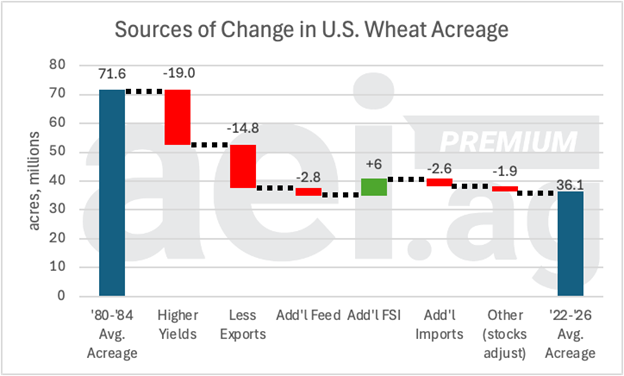 Figure 1. Sources of change in U.S. wheat acreage, avg. of 1980-1984 versus avg. of 2022-2026. Data source: USDA FAS and AEI.ag calculations. (Acreage on a harvested basis; FSI is “food, seed, and industrial uses,” which is largely flour.)
Wrapping it up
U.S. wheat acreage declines have been driven by lower total usage, especially wheat exports, but higher wheat yields over time are easily overlooked. In fact, higher wheat yields are the largest contributing factor behind the U.S. needing half as many acres compared to the early 1980s.
EDITOR’S TAKE:
To be clear, higher yields over time – which offset the number of acres needed – are not unique to wheat. Instead, it’s the combination of higher yields and less usage that has driven the large shifts in wheat acreage. It would have been difficult for wheat to maintain its previous footing even if usage had been unchanged. In short, productivity gains alone can create major changes in production dynamics over several decades, especially if usage doesn’t keep up or declines. Farmers long ago outproduced domestic demand and then looked to exports to absorb the overage, be it wheat, corn, soybeans, etc. The other key to maintaining or increasing crop acreage is innovation, creating new products and increasing demand. A good example is ethanol and the use of corn. Shifting acreage will continue well into the future.
Be sure to keep up with the farming/ranching trends in your area. Know your customer base so you can adapt to changing conditions that could impact your sales, parts and service departments. Also, keeping up with the latest developments can help you better target certain segments within the customer prospect base.