
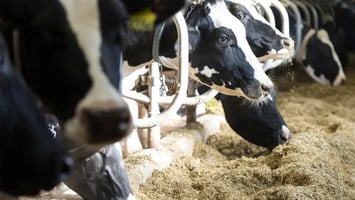
Dairy Outlook: Both butterfat and protein content of U.S. milk are at record highs. Here’s what...
New Dairy Industry Challenge: Balancing Butterfat and Protein
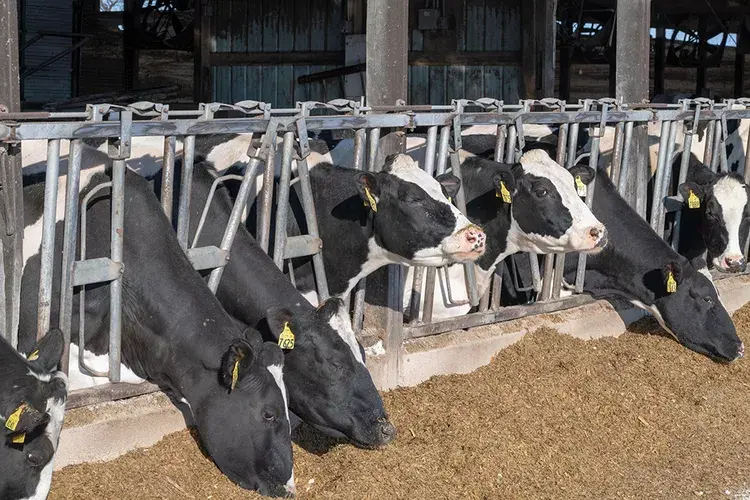
Dairy Outlook: Here’s why the balance between butterfat and protein matters to the U.S. dairy’s future.
Butterfat has been outpacing protein, creating a mismatch between what the milk supply is producing and what cheesemakers and other dairy processors increasingly need to manufacture dairy products.
That component imbalance did not happen by accident, according to Corey Geiger, lead dairy economist at CoBank.
“For much of the past decade, milk checks sent farmers a clear signal — butterfat paid better,” he said. “Producers responded rationally, adjusting farm-level decisions about genetics, nutrition and production strategy, and the milk supply changed accordingly.”
The U.S. has been improving butterfat and protein content in its milk supply over the past decade. That’s a positive development, according to Geiger, as 80% of U.S. milk goes toward producing nutrient-dense dairy products.
But the challenge now is not whether U.S. dairy can grow milk solids. It already has done that. The challenge is whether it can grow the right solids in the right balance for the products and markets that will define future demand.
Making good cheese
The protein-to-fat ratio is a key metric for cheese production.
“Think of the protein-to-fat ratio as the cheesemaker’s balance sheet inside the milk supply,” Geiger said. “Too little protein relative to fat can reduce efficiency, force processors to add protein solids and leave more butterfat looking for a home.”
Both add costs to the cheesemaking category, which uses 49% of the U.S. milk supply.
Cheesemaking formulas are tailored to specific varieties. A protein-to-fat ratio above 0.8 is typically more desirable.
Geiger explained that some cheese varieties always require adding some milk protein solids to the cheese vat. But as the protein-to-fat ratio tumbled from 0.83 to 0.77 over the past decade, the new norm is for nearly all U.S. cheesemakers to add milk protein solids to cheese vats or spin off excess sweet cream or butterfat.
“This trend is accelerating as whey protein concentrate and whey protein isolate production reach record highs,” he added.
At the same time, high-protein products, such as cottage cheese, dairy beverages and Greek yogurt are leading sales growth, each rising more than 7% year over year, according to Circana sales data.
Protein has competing end uses, and the lower protein-to-fat ratio may leave potential cheesemaking value unrealized. At the same time, the extra U.S. butterfat needs outlets.
Through July, U.S. butterfat exports were up 67% year to date at 90 million pounds, bringing exports to 224 million pounds — nearly triple of calendar-year 2023.
Finding the right balance
U.S. dairy farmers’ investment in genetics and genomics has been paying dividends when looking at the three biggest global dairy exporters.
Together, the European Union, New Zealand and the U.S. account for two-thirds of global dairy product and ingredient exports.
From 2015 to 2025, the U.S. improved butterfat content in its milk supply by a remarkable 15.2% as content levels moved from 3.75% to 4.32% during that time. Geiger said the pace quickened, as 60% of that growth took place in just the past five years.
Meanwhile, New Zealand and the EU improved butterfat by just 3.6% and 3.2%, respectively.
“While still world leading,” he added, “the protein portion of the story doesn’t have the same wide margins as butterfat.”
Over the past decade, U.S. protein levels moved from 3.11% to 3.34% for a 7.4% improvement. What is impressive is that 68% of the gains came in the past five years.
When it comes to the globe’s top two dairy exporters, New Zealand improved milk’s protein composition by 3.8% over the past decade, with the EU moving 3.6% higher.
The U.S. dairy industry has shown it can innovate, adapt and stay ahead of global competitors when it comes to improving components. Now, that same focus needs to turn toward balance.
Dairy’s future competitiveness won’t come from simply pushing individual components higher. It will come from finding the right balance between them and producing the products that meet the needs of the markets shaping dairy’s next chapter.
EDITOR’S TAKE:
U.S. dairy farmers continue to fine-tune genetics, nutrition and management to produce high-quality milk and meet the evolving needs of dairy processors and consumers. However, as the article points out, the real future is developing the right balance between protein and butterfat content of milk. I, for one, am convinced that with the use of AI and bio-technology, the dairy industry will not only find the proper balance, but it will happen faster than anyone thinks possible.
You can make truck sales to ag customers happen faster than you think by integrating the CAD process and program into your everyday dealer metrics and accountability. Putting more focus on how to totally weave CAD into every department, and into even those daily sales meetings, can dramatically improve results. We have dealers who do just that, and they are knocking it out of the park. Need help and wish to improve success – give us a call, we’ll be pleased to assist….