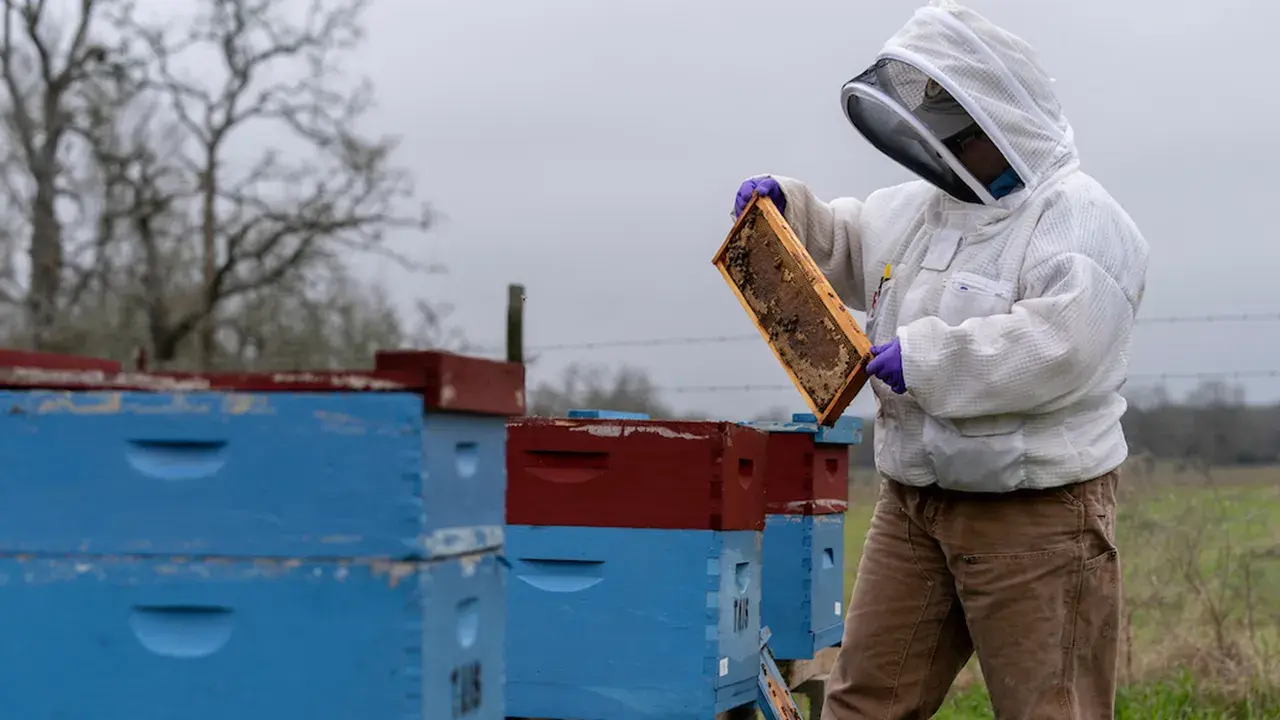
The founder of ForgeBee says lab-grown honeybees may be a key to the future of food production. Gene Robinson, who’s also a professor at the University of Illinois, says colony collapse and other factors continue to contribute to the decline in wild honeybee populations.
“One-third of our nation’s food supply depends on honeybees.” He says, “Their value to our economy is over $15 billion per year. We’re really concentrating on food security for our country.”
ForgeBee CEO Adam Hamilton shared that the company is utilizing AI and robotics to grow units of disposable bees, which will be shipped out to beekeepers and growers. He says, “Their behavior will be manipulated using a combination of chemicals that essentially push the bees to forage more regularly.”
Robinson says that drive to forage means the units will have a two-to-three-week lifespan devoted to pollinating crops.
“If they’re exposed to pesticides and pathogens in the field, it doesn’t matter.” He says, “They’re going to perform their pollination duties, and die, and not bring it back to larger beehives.”
Both Robinson and Hamilton say field testing is expected to begin in 2027.
ForgeBee was recently honored with the Edwin Moore Family Agriculture Award by the University of Illinois. Edwin G. Moore says the award honors his grandfather’s spirit of innovation that he demonstrated on his northern Illinois farm. Moore says that ForgeBee continues a 10-year tradition of recognizing companies on the cutting edge of agriculture.
“This is solving such an important problem.” Moore says, “Bees play such an important part of all that we do. It’s important that we figure out a way to facilitate the continued production of bees. And I’m so pleased that ForgeBee got this award, well deserved, and I’m sure they’ll do great things as a result.”
EDITOR’S TAKE:
Could this be the answer to a shortage of bees for pollination? It is no secret that in recent years, beekeepers have struggled to keep bees available for the many crops that require pollination. At first the collapse of bee populations was a mystery. Some speculated it was caused by exposure to pesticides, while others hypothesized a virus was the culprit. Other experts have developed alternative explanations. Regardless of which theory you subscribe to personally, keeping bee populations available for pollination is a continuing challenge. Lab grown bees that have a specific job to do and a short lifespan could just be the answer. It will be interesting to see the results from the upcoming field tests – we’ll keep you posted.
Speaking of field tests. They are a great way to prove the worthiness of your product. What about having a field test of the AGwagon®? Instead of just looking pretty on your lot, do a ride and drive, letting people experience just how different it really is. There is no better way to sell the product than allowing prospective customers to experience it for themselves.