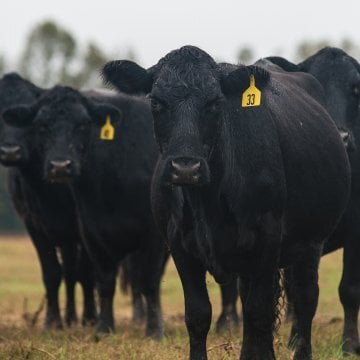
Cattle placements and marketings during July were the lowest for the month on record.
The USDA says 1.422 million head of cattle were placed into feedlots last month, below pre-report expectations, and down 11% on the year. That strong decline is due to ongoing drought in some of the major feeding areas, along with the generally tight supply of cattle.
July marketings were 1.62 million head, 7% less than last year.
The total number of cattle on feed in the U.S. on August 1, 2026 was up 2% at 11.117 million head.
The numbers look supportive to cash, wholesale, and futures prices, but that will also depend on sustained demand.
Commercial red meat production also experienced a year-over-year decline in July.
The USDA says 4.287 billion pounds of red meat were produced last month, down 2% on the year, with a 5% decrease for beef to 2.085 billion pounds against a 1% increase in pork to 2.191 billion pounds.
Cattle slaughter fell 7% due to tight ready numbers to 2.365 million head, even as the average live weight rose 28 pounds to 1,438, and while pork processing dipped slightly to 10.264 million head, a heavier average live weight, up 4 pounds at 286, was enough to cancel out that slowdown.
President Trump recently announced a deal that he says will lower beef prices for American consumers. According to his post on Truth Social, for the next 90 days, the U.S. will allow up to 300,000 metric tons of product for ground beef to be imported with no “out of quota” tariff.
Ethan Lane, senior vice president of government affairs for the National Cattlemen’s Beef Association, says the group is disappointed. “Continuing to undercut U.S. ranchers by flooding the market with additional imports or attempting to, does absolutely nothing to help consumer prices and it destroys confidence at the ranch gate for producers across the country,” he says.
He says, “It is a terrible idea. It continues to be poorly thought out, and we are incredibly frustrated that we are still having this conversation with such a short time before this midterm election.”
Lane says this is not the way to build back the American cattle herd.
EDITOR’S TAKE:
Cattle producers are caught in an untenable position – mid-term elections on one side and the inability to quickly reverse a lower herd population on the other side. With food prices being a top concern in the affordability debate, consumers are putting a lot of pressure on politicians leading into the mid-term elections. That is a major driving force behind opening our markets to no-tariff imported beef. Such a move will likely lower prices temporarily for consumers, but also lower prices for producers, thus further reducing the incentive to expand the herd. Talk about your double-edged sword. It is too early to tell what the longer-term scenario will look like, but one thing is for sure, beef producers are clearly in the crosshairs of political mania.
All that said, cattle producers are still a good target audience for your ag truck sales. They have cash and with that comes a tax liability that you can help them lower by selling them a truck or two. Make sure your inventory is on AgTruckTrader.com®!