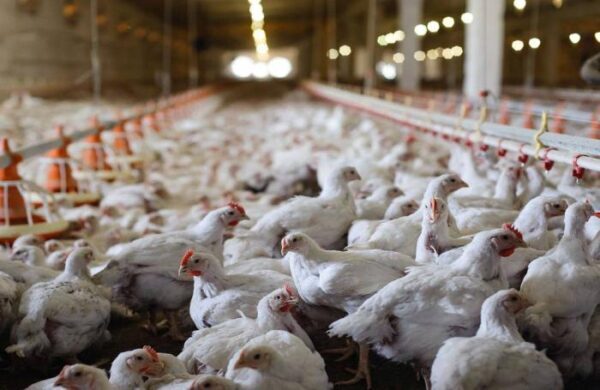
Federal and state officials are encouraging people directly working with dairy cattle, livestock, and poultry to take extra precautions as highly pathogenic avian influenza outbreaks continue to circulate.
Extension Poultry Specialist Ron Kean with the University of Wisconsin-Madison tells Brownfield, “Keep focusing on biosecurity.”
“We know that the wild birds have this virus, and so I think the main focus is trying to not let it get inside the barns,” he says.
Michigan Allied Poultry Industry Executive Director and former state veterinarian Nancy Barr says producers are concerned an El Niño winter could prolong the risk of an outbreak.
“We are still very much interested in having a vaccination program to protect our flocks,” she tells Brownfield. “We’ve been encouraging USDA to continue moving forward with that program.”
USDA has confirmed the virus in dairy cattle in five states, including Indiana and Kansas, and commercial poultry flocks across 10 states over the past 30 days.
In Washington, three human cases have also been confirmed following exposure to infected cattle, and one person has died.
Whole-genome sequencing by USDA has confirmed that detections in Pacific Northwest dairy herds were likely introduced through cattle movement from Idaho to Washington.
Financial assistance is available for dairy farmers to strengthen biosecurity and offset costs associated with HPAI.
Officials also recommend people working directly with livestock, poultry, or wild birds use personal protective equipment.
EDITOR’S TAKE:
This is certainly not our first time reporting on this pesky disease that can be so devastating, especially to poultry and dairy. The challenge is that it is spread by wild/migrating birds and is very difficult to control once it infects other animals. This latest biosecurity warning should be top of mind for any poultry or dairy producer.
One way you might be able to assist is by putting an announcement or advisory on your website, or in a message targeted at your ag customers. Encourage them to increase their efforts with biosecurity and to notify local veterinarians or state ag officials if they suspect an infection.