

Following an incredibly dry June, early July saw the return of much-needed rainfall for parts of...
Corn Belt Agronomists Share One Word to Sum Up June’s Impact
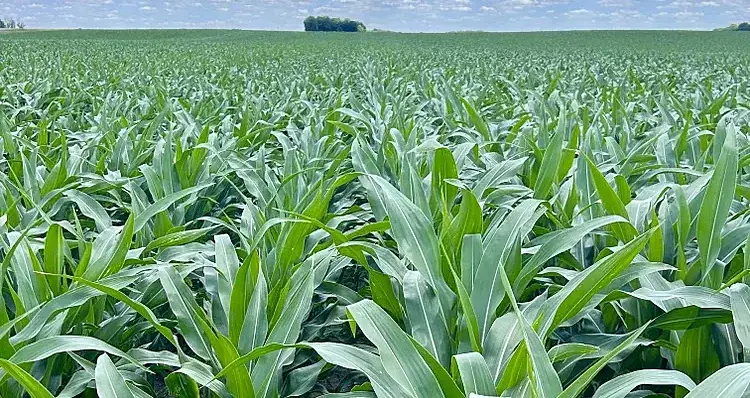
As we close the book on June, 67% of the corn condition is rated good to excellent in the top corn growing states, according to the most recent USDA Crop Progress report. The USDA reported 9% of the corn crop reached the silking crop growth stage as of June 28, 2026.
To understand June’s impact on the corn crop, Successful Farming® asked agronomists in some of the top corn-growing states to describe June in a single word, reflecting the crop’s progress, condition, and challenges in their regions. Below are their insights from the past month.
Variable
Similar to May, multiple agronomists agreed that June was best described as “variable.”
“What started as an abnormally hot, windy and humid first 10 days was followed by two weeks with abnormally cooler (and generally drier) conditions,” said Mike Blaine, Minnesota-based agronomist for Beck's. “It now appears that June will end the way it began—with a string of 7 to 10 days of very warm, humid weather! Soybean row closure in 30-inch rows may still happen.”
Jason Schley, an agronomist with BW Fusion in South Dakota, also describes June as variable.
Logan Dinkla, a Syngenta agronomist based in Iowa, said the month of June had a lot of variability and extremes.
Wet
Illinois agronomist for Beck’s Drew Beckman describes June as wet. “While June started dry for northwest Illinois, many areas have received 6-10+ inches of rain in just a few rain events,” Beckman said. “This has led to yellowing and stunted growth in many fields with soil borne pathogens wreaking havoc on our soybean stands.”
Wyffels Hybrids agronomist Eric Wilson also said his Iowa territory was wet.
Soggy
Jared Roskamp, BASF agronomist in Missouri, experienced a soggy June.
“Most of my geography experienced several events of heavy rain and made for short windows to manage this crop,” Roskamp said. “Herbicides, top-dress fertilizer, and scouting was more difficult as field conditions were not favorable to get equipment across them.”
Weather
Brady Kappler, Nebraska agronomist for BASF shared that weather had the last word in June.
“Mother Nature always bats last,” Kappler said.
Rapid
Susan Hart, field agronomist for Stine Seed supporting growers in western Minnesota, North Dakota, and northern South Dakota, described June as rapid.
“We started the month off with corn just barely poking out of the ground, but with 90+ degrees we gained heat units rapidly,” said Hart. “This helped push the corn along in the matter of a couple weeks. Unfortunately, some growers saw some wind damage with storms and the rapid growth, however, it allowed the crop to catch up after a slow start.”
Decelerated
Katie Jorgensen, an independent agronomist covering territories in Iowa and Nebraska, said decelerated best described June.
“Growth in the beginning of the month was rapid but as moisture needs increased and rain decreased, corn and soybean growth has slowed tremendously as we round out the month. We went from speedy rabbit to slow and steady turtle.”
Radical
Radical is how Phil Krieg, agronomic service representative for Syngenta Crop Protection, described June.
“Lots of rain for many with flash flooding and ponding in fields, some hail, more tornadoes than we have ever seen in June, dry for some areas, cool, more cloudy than normal, weedy, difficult forecasts and, overall, somewhat impossible," Krieg said.
Erratic
Aaron Brooker, Beck's agronomist with coverage areas in Indiana and Michigan, described June as erratic.
“The weather conditions have changed dramatically in my area over the month,” Brooker said. “From cool and dry, to warm and dry. Then two weeks going from warm and wet to unseasonably cold and wet. Now we’re headed into a period of record-breaking heat and humidity, especially in the northern parts of my territory. I’m not sure if the crops know what to do. They’re finally taking off, but crop growth and development was very inconsistent.”
Resilient
“Resilient” is how Jacob Foote, Stine agronomist based in Ohio described June.
“Corn crops across the state have faced nothing but challenges throughout the month of June,” Foote said. “Cool days, extended rain, and early cutworm pressure are all ingredients for yield loss and late season challenges.”
“However, despite all of these struggles, cornfields are looking very impressive,” Foote said. “Extended heat, sunshine, and humidity will allow corn to really take off.”
Positive
Rob Nalley, Beck's Agronomist in Kentucky, used the word “positive” to describe June.
“Despite localized challenges from flooding and wind damage, the majority of Kentucky's corn crop is in good condition and trending in the right direction,” Nalley shared. “While conditions are far from perfect, timely rainfall and favorable temperatures across much of the state have positioned many fields for excellent yield potential if weather remains cooperative through pollination and grain fill.”
Volatile
“Volatile” is the word Syngenta agronomist Nick Groth said best describes corn development across Wisconsin in the month of June.
“We have really seen everything and many extremes throughout this month,” said Groth. “We started a little on the dry side, but much of the state then started to get some pretty heavy rain showers, and even some severe weather that brought with it some pretty significant hail damage.”
“I would guess this has been the most hail damage I have seen in at least the last five years,” Groth said.
EDITOR’S TAKE:
Despite the various descriptions, it appears that the final word is probably “variable”. Why? Because every part of the corn belt seemed to have different conditions and its own set of challenges. Overall, however, despite the differences, the vast majority of respondents reported the crop is progressing very well and is positioned to provide a very favorable outcome this fall. But as one of the agronomists said, “Mother Nature always bats last!”
Now might be a great time to offer some pre-harvest specials from your parts and service departments. Help the corn farmers (and other farmers/ranchers) in your area prepare for harvest by helping them reduce pressure on their time.


-1.jpg?height=200&name=John%20Deere%20harvest%20scene%202_0%20(2)-1.jpg)
