
An egg market analyst says highly pathogenic avian influenza (HPAI) is already causing disruptions...
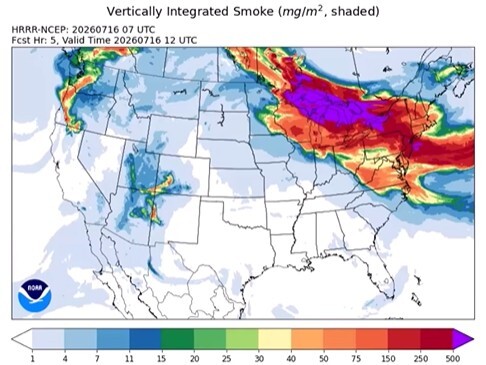
A state climatologist says a heat dome and a strengthening low-pressure system helped to push dense wildfire smoke from Canada across the Great Lakes into the Northeast.
Michigan’s Jeff Andresen says, “That smoke basically took charge. It strengthened and forced the upper airflow across the Great Lakes region to be more out of the northwest, which, of course, is one of the reasons we experienced the problems with the smoke,” he explains.
Field crops entomologist Chris DiFonzo says the intensity of the wildfires was driven in part by an expansion of some insects.
“Some of that is actually driven by expansion of certain bark beetle species that have killed a lot of trees over the last maybe 10 or 20 years,” she says. “There’s a lot of fuel there, and then the fires become more thorough and bigger.”
Andresen says the fires in western Ontario have been closer than in recent years, increasing the concentration of smoke, which can impact some crop development and harvests.
“When we have these really unusually smoky, hazy skies, we reduce the amount of solar energy getting down to the surface,” he says. “That changes a number of things, but a big one is the temperature of the forage, whatever it is that you’ve cut and is lying on the ground here, it’s going to be less.”
He says a cooling off and better chances for rain are expected, but persistent drought and warmer-than-normal conditions could cause the fires to continue throughout the summer.
Air quality alerts are in effect across at least 17 states from Minnesota to Virginia.
EDITOR’S TAKE:
Most of you have at least heard some mention of the intense smoke that crossed the U.S. border because of these Canadian wildfires. Many areas encouraged citizens to remain inside or avoid travel as a result. However, you may not have thought about the consequences to agriculture. Although it is too soon to know the precise impact, we cannot rule out stunted growth of crops or even respiratory effects on cattle if they were outdoors. This type of unplanned risk always has consequences, but we will have to wait until harvest to know just how great they are.
You have a great tool to help your ag customers mitigate their risk when purchasing a new truck to be used on the farm/ranch. That tool is Ag Protect -- a warranty policy that covers what the OEM warranty does not when the vehicle is used on a farm/ranch. It can also be a great addition to your F&I department.