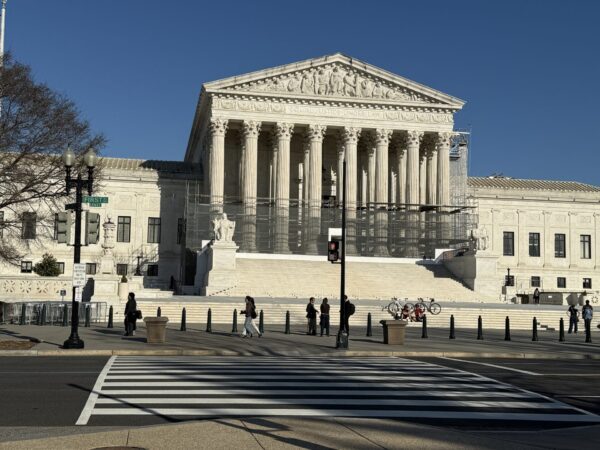
The U.S. Supreme Court says the International Emergency Economic Powers Act (IEEPA) doesn’t allow the President to impose tariffs.
In a 6 to 3 ruling, the justices say the constitution gives Congress alone the power to lay and collect taxes and duties. Because tariffs are considered taxes, the President has no authority to impose them.
The SCOTUS ruling refutes many, but not all the tariffs imposed by President Trump.
Kam Quarles with the National Potato Council says he’s still reviewing the opinion, but it’s likely the Trump administration will use other trade authorities to invoke tariffs.
“There are other mechanisms to get to this goal,” says Quarles.
The court’s ruling directly affects U.S. tariff policy, which has a ripple effect on trade, ag and the economy.
Other ag groups, like the American Soybean Association (ASA) and the International Fresh Produce Association (IFPA), say they welcome the clarification of the limits of IEEPA.
ASA President Scott Metzger says, “we urge the President to refrain from imposing tariffs on agricultural inputs using other authorities.”
IFPA says they support targeted tariffs, when necessary, but not the widespread use as a default policy, and the association urges policymakers to move away from broad tariffs, lower trade barriers and focus on longer-term trade solutions.
House Ag Committee Ranking Member Angie Craig from Minnesota also welcomes the SCOTUS decision, but says she fears the tariffs have already caused lasting damage, sending more business to South America and it will take years for the U.S. to recover.
House Ways and Means Subcommittee on Trade Chairman Adrian Smith from Nebraska says, “In light of the decision, the U.S. must ensure trading partners uphold the market access commitments already secured.”
EDITOR’S TAKE:
The reaction from these ag organizations seems to favor lower or no tariffs on ag products but use other market expansion tools instead. President Trump has indicated that “Plan B” is already being implemented. Although we don’t have a lot of details yet about “Plan B”, it is pretty safe to say that the goal will be to not wander too far from where we are today when it comes to the level of tariffs. Will the U.S. be required to pay back some of the tariff funds already collected? The Supreme Court did not address that issue, but it will likely work its way back through the court system and somewhere down the road be in front of the Supreme Court Justices again. It is too soon to assess what all of this means to the ag economy, but we will definitely keep a close eye on what transpires as we move forward.
For those ag customers seeking security and certainty be sure to offer them CAD Protect. Most OEM warranties do not cover trucks used on the farm or ranch. CAD Protect is specifically designed to eliminate that problem, so that the farmers/ranchers can be assured their truck investment is safe and is covered.